Understanding Eye Tracking Technology
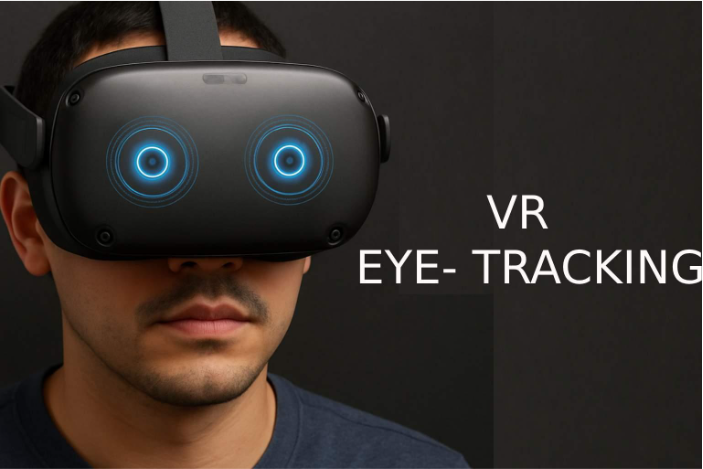
Eye tracking in VR refers to the use of sensors and cameras to monitor where a user is looking in the virtual environment. This technology captures data on eye movements, gaze direction, and pupil dilation, allowing VR systems to respond dynamically to the user’s focus and attention.
Eye tracking technology is pivotal because it enables VR systems to render graphics selectively based on what the user is looking at, a technique known as foveated rendering. By concentrating processing power on rendering only the central vision sharply while reducing detail in the peripheral vision, this approach significantly reduces the computational load, enhancing system performance and reducing latency. Furthermore, this efficiency boost is particularly valuable in mobile VR systems, where hardware capabilities are more limited than in high-end setups.
Enhancing User Interaction
Incorporating eye tracking in VR game development services allows for more natural and intuitive interactions. Users can make selections, aim, or navigate menus simply by looking at them, creating a seamless and immersive experience. This level of interaction mimics natural human behavior and can potentially eliminate the need for traditional input devices like controllers in some scenarios.
Moreover, eye tracking facilitates emotional engagement by allowing avatars to reflect the user’s eye movements, making virtual characters appear more lifelike and responsive. This capability is particularly beneficial for VR companies in India and worldwide as they strive to create more engaging and emotionally resonant experiences. The ability to track where players are focusing their attention also provides developers with insights into which aspects of the game are most engaging or require refinement.
Customizing User Experience
Eye tracking technology allows for a more personalized VR experience by adapting the environment based on the user’s focus and preferences. For instance, adaptive difficulty levels can be implemented by observing where users spend most of their time or struggle. This customization extends to educational VR applications, where content can be tailored to keep learners engaged and focused.
Additionally, eye tracking can be used to manage user comfort and reduce motion sickness by ensuring that visual and auditory stimuli are aligned with the user’s focus. This results in a smoother, more comfortable VR experience, making it accessible to a wider audience. As eye tracking technology becomes more sophisticated, the potential for personalization in VR applications will continue to expand.
Facial Capture: Bringing Emotions to Life

The Mechanics of Facial Capture
Facial capture, or facial recognition technology, involves mapping and recording facial movements to create realistic animations for avatars and characters in a virtual environment. This technology uses a combination of cameras and sensors to capture the subtleties of facial expressions, translating them into real-time animations within the VR space.
Facial capture technology employs advanced algorithms to analyze facial data, ensuring that even minute expressions are accurately captured and replicated. This precision allows for a more authentic representation of emotions, making interactions in VR feel genuine and immersive. The technology is evolving rapidly, with improvements in sensor accuracy and processing speed enabling more detailed and nuanced facial animations.
Creating More Immersive Experiences
Facial capture technology enhances the VR experience by adding a layer of emotional realism that was previously unattainable. By accurately replicating the user’s facial expressions, this technology creates a more personal and immersive experience. Avatars that react and emote in real-time based on the user’s expressions can create more profound connections between players and the game world.
In multiplayer VR settings, facial capture allows for more natural interactions between players. Seeing the genuine expressions of fellow players enhances communication and fosters a sense of presence and camaraderie, making social VR experiences richer and more engaging. This technology also enables more lifelike storytelling, where character interactions are enriched by emotional depth, enhancing narrative-driven games.
Enhancing Accessibility and Inclusivity
Facial capture technology can also contribute to making VR experiences more accessible and inclusive. For individuals with physical disabilities, facial capture offers an alternative method of interaction, allowing them to control and navigate VR environments using facial expressions. This inclusivity not only broadens the potential user base but also enriches the diversity of experiences and perspectives within VR communities.
Moreover, as facial capture technology becomes more advanced, it can support a wider range of expressions and emotions, enabling more nuanced and culturally diverse character representations. This diversity fosters a more inclusive VR ecosystem, where users from different backgrounds can feel represented and connected within virtual environments.
Impact on VR Game Development Services
Insights into Player Engagement
For game developers, eye tracking and facial capture provide invaluable insights into player behavior and engagement. By analyzing where players focus their attention and how they react emotionally during gameplay, developers can gain a deeper understanding of what elements captivate players or cause frustration.
These insights enable developers to refine game mechanics, optimize difficulty levels, and enhance narrative elements to align better with player preferences. By leveraging the data collected through these technologies, developers can create more compelling and personalized gaming experiences that resonate with their audience. This data-driven approach to game design not only improves player satisfaction but also boosts retention and monetization efforts.
Redefining Game Design
The integration of eye tracking and facial capture into expert VR game development services is prompting a reevaluation of traditional game design principles. Developers can now design environments and narratives that respond dynamically to player emotions and focus, creating a more adaptive and personalized experience.
For instance, horror games can adjust the intensity of scares based on the player’s gaze and emotional state, providing a tailored experience that heightens suspense and engagement. Similarly, narrative-driven games can modify dialogue and character interactions based on the player’s emotional responses, creating a more immersive and emotionally resonant storyline. This adaptability allows for more replayable experiences, where each playthrough can offer a unique adventure.
Revolutionizing Game Testing and Feedback
These technologies are also revolutionizing the game testing and feedback process. By observing real-time player reactions and attention patterns, developers can identify potential issues or areas for improvement more accurately and efficiently. This data-driven approach allows for more targeted adjustments, reducing development cycles and improving the final product’s quality.
Furthermore, eye tracking and facial capture can facilitate remote testing and feedback collection, providing developers with a broader pool of testers without geographical limitations. This global perspective can lead to more universally appealing games, ensuring that the VR experiences resonate across different cultures and demographics.
Challenges and Future Prospects
Overcoming Technical Hurdles
Despite the transformative potential of eye tracking and facial capture, several challenges remain. Ensuring accurate and consistent tracking in varying lighting conditions and across different facial features is a technical hurdle that developers and hardware manufacturers must address. Additionally, maintaining user privacy and data security is crucial as these technologies capture sensitive personal information.
The hardware required for accurate tracking can also be costly, posing a barrier to widespread adoption. However, ongoing advancements in sensor technology and AI-driven software solutions are expected to lower costs and improve accessibility over time. As the technology matures, collaborations between tech companies and VR developers will be essential to overcome these challenges and drive innovation forward.
The Road Ahead
Looking ahead, the integration of eye tracking and facial capture in VR UX is poised to become more sophisticated and widespread. As these technologies evolve, they will likely become standard features in VR headsets, opening new avenues for creativity and innovation in game design.
For VR companies in India and worldwide, investing in eye tracking and facial capture technology is a strategic move that can set them apart in a competitive market. By embracing these advancements, developers can create VR experiences that are not only visually stunning but also emotionally engaging and deeply immersive. As industry collaboration and technological advancements continue, the future of VR gaming promises to be more inclusive, personalized, and transformative than ever before.
Potential for Cross-Industry Applications
Beyond gaming, eye tracking and facial capture have the potential to revolutionize other industries. In healthcare, these technologies can assist in diagnosing and treating mental health conditions by analyzing patient emotions and focus. In education, they can create more engaging and effective learning experiences by adapting content to student attention and emotional responses.
In the corporate world, these technologies can enhance virtual meetings and remote collaborations by improving communication and emotional understanding. As the applications of eye tracking and facial capture expand, their impact on various sectors will likely drive further investment and innovation, shaping the future of VR beyond the gaming industry.
In conclusion, eye tracking and facial capture are revolutionizing VR UX by enhancing realism, facilitating natural interactions, and providing valuable insights into player engagement. As these technologies continue to advance, they will undoubtedly play a pivotal role in shaping the future of VR gaming, offering developers exciting opportunities to push the boundaries of immersion and creativity.