
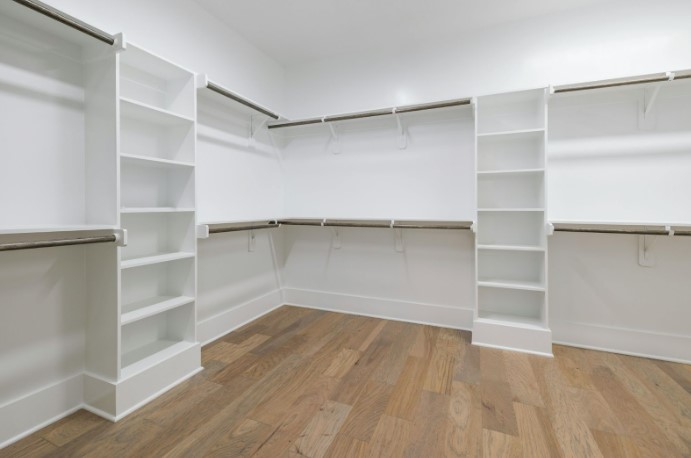
Dreaming of ditching that overstuffed, messy closet for a spacious, perfectly organized system that makes getting dressed easy?
We’ve all been there. Sloshing through a puddle of half-washed clothes. Darn, another wrinkle on that expensive suit. Spending more time in the closet than getting ready. You thought you’d never admit this out loud, but most home closets are cookie-cutter design failures.
That’s where custom closet planning comes in.
Need to know more before investing in a custom closet?
Custom closet planning is a crucial process that can make or break the efficiency, functionality, and aesthetics of a homeowner’s closet space.
If you’re ready to finally maximize every inch of your closet storage, but not sure where to start, this article is for you.
In this article we cover:
- Why Custom Closets Beat Standard Solutions Every Time
- Essential Planning Steps Before You Start
- Smart Layout Strategies That Maximize Every Inch
- Budget Considerations That Actually Matter
- Common Planning Mistakes That Cost You Money
Why Custom Closets Beat Standard Solutions Every Time
Think of your closet as a puzzle. Standard closets try to jam square pegs into round holes by offering one-size-fits-all storage solutions.
Custom closets are different. They’re built around YOUR specific needs and lifestyle, not a generic template. Instead of forcing belongings to fit predetermined spaces, custom closet design is tailored around the things you ACTUALLY own and use.
Closets are an important part of the home, with the custom closet market set to grow from $31.43 billion in 2024 to $59.12 billion by 2033. The market is expected to expand at a steady pace in the coming years, offering homeowners new opportunities and solutions.
What’s another reason more homeowners are opting for custom closets?
The evolution of home. In particular, the rise of multifunctional living. Your closet is no longer just a place to store clothes. It might need to function as office storage, workout gear, or overflow space for entertaining.
Essential Planning Steps Before You Start
Planning may sound like a headache, but it’s a small price to pay for a closet that actually works for you.
Start right, and you save money and time on DIY install or professional custom closet companies, like Closet Now custom closets. No surprise: homeowners who jump straight to shopping before thinking things through end up with a closet that leaves them frustrated.
To avoid this mistake, follow these 3 simple steps for essential closet planning before you start shopping for materials or installing:
- Take Inventory of Your Belongings
- Analyze Your Daily Routine
- Measure Everything Twice
Let’s take a closer look at each step.
Take Inventory of Your Belongings
Planning a custom closet starts with one simple step: empty your closet and count EVERYTHING!
Yep, really.
The best way to start is to empty the closet of everything and sort items into piles, like hanging clothes, folded items, shoes, accessories, etc.
Take the time to carefully go through every item and create categories that make sense to you:
- Hanging clothes – long or short hangers
- Folded items – pants, shirts, sweaters
- Shoes
- Hats, bags, purses, small accessories
Yes, you’re going to count every single one. Shoes, handbags, suits – the whole thing. When you’re finished, write down the totals. Why? This becomes the blueprint for your design.
Analyze Your Daily Routine
Planning a custom closet isn’t just about physical storage, it’s about FUNCTION. Think about how you actually use your closet space.
Which items do you reach for most often? Which things need special care and handling? Which are used seasonally?
Take notes here and you can use this analysis to decide what gets the prime closet real estate.
Measure Everything Twice
No cheating here. Custom closet planning is all about precision, and that means taking careful measurements of your space.
Grab a tape measure and jot down height, width, depth, ceiling height, door clearances, electrical outlets, etc.
Better yet, take the time to measure TWICE and don’t be afraid to bring in a professional for accuracy.
Smart Layout Strategies That Maximize Every Inch
The key to awesome custom closets is smart layout planning. The right layout works WITH your space instead of against it.
Look, smart closet layout beats raw square footage any day. Want proof? Check out the before and after of this Seattle couple’s closet renovation. Less than 30 square feet (literally half of what most homeowners have) but the genius custom layout they had designed from scratch makes ALL the difference:
They used space better than most of us with 3x the area.
So, how to plan a layout that really works? Let’s break it down:
- The Zone Approach
- Vertical Space Maximization
- Accessibility Planning
The Zone Approach
The first step to maximizing closet space is to divide and conquer.
Break your closet into zones based on item types and use frequency.
Essential closet zones to include in your design:
- Daily use zone – eye level storage for everyday items that are used most often
- Seasonal zone – upper shelving for clothes and items you rotate out of season
- Special occasion zone – protected storage for dresses, suits, and other delicate items
- Accessory zone – dedicated spots for shoes, bags, jewelry, and hats
Vertical Space Maximization
Most closets let this precious vertical space go to waste.
Custom closet planning kills two birds with one stone by using it all. Install double-hang rods up high for short clothes and shelves or seasonal storage above that.
Accessibility Planning
Rule number one of accessibility planning: if it’s hard to reach, you won’t use it.
Put the most frequently used items in the waist to shoulder height zone. Use pull-out drawers or bins for small items, and consider good lighting.
Budget Considerations That Actually Matter
Custom closets come in all price ranges, from a few thousand to tens of thousands of dollars. The challenge is knowing where to spend and where to save.
Materials Make the Difference
Materials are where most homeowners get surprised in custom closet planning. This is where cost vs. value decisions are most important.
What matters most to you?
- Laminate – Budget-friendly, easy clean, lots of style options
- Wood veneer – Mid-range pricing, natural wood finish
- Solid wood – Premium, high-quality investment with lasting value
Don’t forget the hardware quality either. Cheap slides and hinges really annoy you every single time you open and close drawers.
Professional vs. DIY Installation
The average custom closet project is estimated to cost $3,905 with installation fees between 30-50% of the total budget.
Insiders Tip: In complex layouts with expensive materials, go with professional installation. The pros know what they’re doing and it saves time.
You can DIY basic hanging systems but advanced customization usually requires a pro. Factor this into your budget from the start.
Phased Implementation
You can tackle custom closets in phases over time, instead of all at once. Recommended strategy:
- Start with basic hanging and shelving systems
- Add specialized storage and accessories next
- Finish with premium luxury features if budget allows
Common Planning Mistakes That Cost You Money
Homeowners make predictable mistakes when they rush into closet planning.
Biggest mistakes to avoid in custom closet planning:
Ignoring Future Needs
Ignoring future needs and growth potential
Overlooking Lighting Requirements
Failing to plan for enough lighting
Choosing Style Over Function
Opting for style over function and usability
Underestimating Timeline Requirements
Underestimating timeline requirements
Wrapping It Up
Custom closet planning can make the difference between a headache-inducing space and one that makes your life easier every day.
Done properly, it requires an honest assessment of your current and future needs, strategic layout planning, and smart budgeting. While some classic planning mistakes cost more money to fix later.
With home improvement spending expected to reach $485 billion by 2024, custom closets represent a smart investment that improves daily life while adding lasting value to your home. Consider this: 63% of homeowners prefer to remodel their current home rather than move to one that’s already been renovated.
Take the time to plan right and you end up with a custom closet system that works perfectly for your lifestyle and home for years to come.
Whether you DIY the project or work with professionals, thoughtful planning that puts your needs first is essential.


