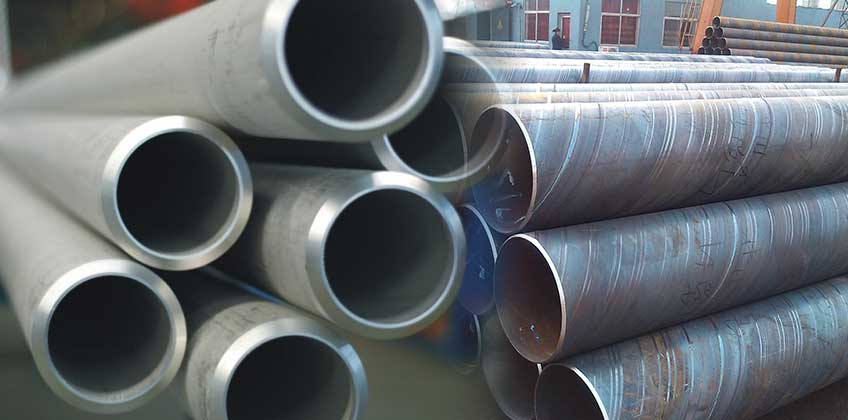
There are many kinds of steel pipes on the market, such as: seamed pipes, seamless pipes, etc., but many people can’t tell the difference, so what is the difference between seamed steel pipes and seamless steel pipes?
1) What is the difference between seamed pipe and seamless pipe?
1. Different appearance: the inner wall of the welding part of the seamed steel pipe generally has welding ribs, while the inner wall of the seamless steel pipe is smooth and generally has no welding ribs. You can find here-hdpe pipe welding
2. Different pressure: the pressure of the seamed steel pipe is generally above 1.6 MPa, while the pressure of the seamless steel pipe is generally above 7 MPa.
3. Different uses: seamless pipes are mainly used as pipes or structural parts for conveying fluids, mainly in the machinery industry, while seamed steel pipes are mainly used in the construction industry, such as water, gas, compressed air and other low-pressure fluids. But when it comes to pressure pipes, seamless steel pipes are used. However, under the same conditions, the use of seamless steel pipes can transport fluids with larger diameters and some solid particles, and for piping systems, seamless steel pipes are more corrosion-resistant and have a longer service life than seamed steel pipes.
4. Different process: the seamed steel pipe needs to be rolled first, and then welded. Seamless steel pipes are made in one go using rolling technology.
5. Different prices: Because the production process of seamless steel pipes is more complicated, the price is more expensive than seamed steel pipes, while seamed steel pipes are mainly made of steel plates (steel strips) for secondary welding, which are cheap and widely used.
2) What are seamed pipes and seamless pipes?
1. Seamed pipe
Seamed steel pipe is also called welded steel pipe. It is made of carbon steel that is easy to weld. It is generally marked by nominal size. The commonly used nominal size is DN15 to DN100, and DN150 is the largest. Nominal diameter. Seamed steel pipes are often used to transport low-pressure fluids such as gas, cold water, and hot water, so they are also called gas pipes and water pipes.
2. Seamless pipe
The seamless steel pipe is made by perforating the whole round steel, and the steel pipe without weld seam on the surface is called seamless steel pipe. According to the production method, seamless steel pipes can be divided into hot-rolled seamless steel pipes, cold-rolled seamless steel pipes, cold-drawn seamless steel pipes, extruded seamless steel pipes, and pipe jacking. According to the cross-sectional shape, seamless steel tubes are divided into two types: round and special-shaped, and special-shaped tubes have various complex shapes such as square, oval, triangular, hexagonal, melon-shaped, star-shaped, and finned tubes. The maximum diameter is up to 900mm and the minimum diameter is 4mm. According to different uses, there are thick-walled seamless steel pipes and thin-walled seamless steel pipes. Seamless steel pipes are mainly used as petroleum geological drilling pipes, cracking pipes for petrochemical industry, boiler pipes, bearing pipes, and high-precision structural steel pipes for automobiles, tractors, and aviation.
3) What are the most common materials for seamed pipes and seamless pipes?
The most commonly used material for seamed steel pipes and seamless steel pipes is carbon steel. Carbon steel pipes can be divided into seamless steel pipes, straight seam steel pipes and spiral steel pipes. Rolled seamless carbon steel pipe is made of steel ingot or solid round steel through perforation into capillary, and then hot rolled, cold rolled or cold drawn.