
Who Plays Medusa in Percy Jackson? Jessica Parker Kennedy, who plays Medusa in the Disney+ show Percy Jackson and the Olympians, didn’t have much fun with the show’s special effects. Medusa is a captivating character from Greek mythology, most notably featured in the Percy Jackson series by Rick Riordan. In the books, she is portrayed as a complex figure, cursed to live as a monster with the ability to turn anyone who gazes upon her into stone.
Medusa’s character embodies themes of tragedy and transformation, providing depth to the narrative. Her story has resonated with audiences for centuries, leading to various adaptations across different media. In the Percy Jackson film adaptation, Medusa’s character is brought to life, showcasing both her monstrous and human sides.
The portrayal emphasizes her tragic backstory while retaining the fearsome qualities that make her a formidable antagonist. As we explore Medusa’s character in the Percy Jackson universe, we’ll delve into her background, role within the story, and the significance she holds in both the books and film adaptations, highlighting her enduring legacy in mythology and popular culture.
Character in Books

In the Percy Jackson series, Medusa is depicted as a tragic character rather than solely a monster. Originally a beautiful maiden, she was transformed into a gorgon as punishment from Athena after being violated in her temple.
This backstory adds a layer of complexity to her character, inviting readers to empathize with her plight. Medusa resides in a lair filled with statues of her victims, showcasing her power and the consequences of her curse. In The Lightning Thief, Percy and his friends encounter her while on a quest, highlighting her role as both an antagonist and a victim of circumstance.
Her character serves as a reminder of the harsh realities of the gods’ whims and the consequences of beauty and jealousy. Through this portrayal, Medusa becomes a symbol of transformation and loss, resonating with themes of identity and the struggle for agency in a world dominated by powerful deities.
Film Adaptation
In the Percy Jackson film adaptation, Medusa is portrayed by actress Uma Thurman, who brings a unique flair to the character. The film captures her monstrous essence while also hinting at her tragic backstory. Thurman’s performance showcases Medusa’s seductive charm and underlying vulnerability, making her a memorable antagonist.
The film’s visual effects enhance her terrifying presence, emphasizing her ability to petrify those who gaze upon her. While some liberties were taken in adapting her character for the screen, the essence of Medusa as a tragic figure remains intact.
Her scenes are pivotal, providing tension and excitement as Percy and his friends navigate her lair filled with statues. Overall, the film adaptation successfully translates Medusa’s complexity from the books to the screen, allowing audiences to appreciate both her fearsome powers and her tragic narrative.
Character Background
Medusa’s background is steeped in tragedy and transformation, making her one of the most compelling figures in Greek mythology. Originally a beautiful priestess of Athena, she was cursed by the goddess after being violated by Poseidon in Athena’s temple.
This punishment transformed her into a gorgon, a creature with snakes for hair and the ability to turn anyone who looked at her into stone. The curse stripped Medusa of her beauty and humanity, forcing her to live in isolation.
Over time, she became a symbol of fear and vengeance, with her tragic past often overshadowed by her monstrous appearance. In the Percy Jackson series, this rich backstory is explored, allowing readers to empathize with her plight and recognize her as both a victim and a villain. Medusa serves as a poignant reminder of the consequences of divine retribution and the complexities of identity shaped by trauma.
Role in the Story
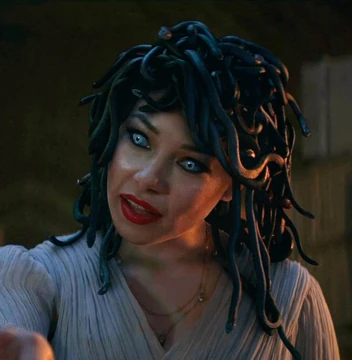
Medusa plays a significant role in the Percy Jackson series, particularly in The Lightning Thief. Her encounter with Percy and his friends serves as a crucial turning point in their quest. As they seek to recover Zeus’s stolen lightning bolt, they must navigate the dangers of Medusa’s lair, which is filled with the petrified remains of her victims.
This confrontation serves as both a physical challenge and a moral dilemma for the characters. Medusa embodies the themes of victimization and vengeance, challenging Percy to confront not only her monstrous nature but also the injustices that led to her transformation.
Through their interaction, the story explores the complexities of good and evil, pushing the characters to reflect on their choices and the consequences of their actions. Ultimately, Medusa’s role enriches the narrative, adding depth to the themes of empathy, identity, and the struggle against fate.
Powers
Medusa possesses formidable powers that make her one of the most feared creatures in mythology. Her primary ability is to turn anyone who gazes directly at her into stone, a power that serves as both a weapon and a curse.
This petrifying gaze is a result of her transformation into a gorgon, and it highlights the tragic irony of her existence—she is both a victim of her circumstances and a danger to others. Additionally, Medusa has enhanced strength and agility, allowing her to defend herself against would-be attackers.
Her snakes, which replace her hair, can also act independently, providing her with an additional layer of protection. In the Percy Jackson series, these powers are central to her character, as they create a sense of menace while simultaneously evoking sympathy. Medusa’s abilities reinforce the themes of transformation and the duality of her nature, illustrating how power can be both a gift and a curse.
Conflict with Athena
Medusa’s conflict with Athena is central to her tragic story. Originally a beautiful priestess dedicated to Athena, Medusa was punished by the goddess after being violated by Poseidon in her temple. Athena’s wrath transformed Medusa into a gorgon, stripping her of her beauty and condemning her to a life of isolation and monstrosity.
This act of divine retribution highlights the harsh realities of the gods’ whims in Greek mythology, where mortals often suffer for the actions of the powerful. The conflict underscores themes of jealousy, power, and victimization, as Medusa becomes a symbol of the consequences of the gods’ decisions.
In the Percy Jackson series, this backstory provides depth to Medusa, allowing readers to understand her pain and the injustices she faced. The conflict with Athena serves as a poignant reminder of the complexities of morality in mythology, where victims can become villains and beauty can be transformed into a monstrosity.
Defeated by Perseus
In Greek mythology, Medusa meets her end at the hands of the hero Perseus. Tasked with retrieving her head as a trophy, Perseus approaches cautiously, using a reflective shield to avoid her petrifying gaze. This clever strategy allows him to strike without directly looking at her, ultimately resulting in her defeat.
Perseus beheads Medusa and uses her severed head as a powerful weapon, capable of turning enemies to stone even after her death. This confrontation is significant as it highlights the themes of heroism and cleverness over brute strength, showcasing Perseus’s resourcefulness.
In the Percy Jackson series, this mythological event is referenced, adding depth to Medusa’s character arc. Her defeat symbolizes the tragic fate of an aonce beautiful maiden transformed into a monster, reinforcing the notion that even the most fearsome beings have a story marked by suffering and loss.
Significance in the Film
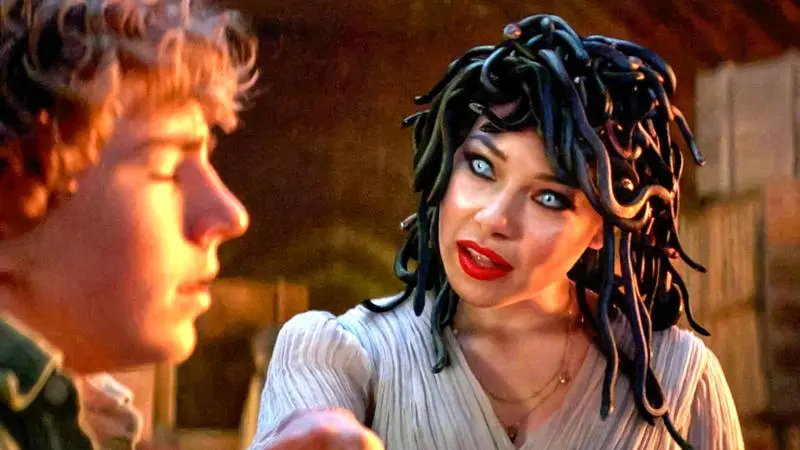
Medusa holds a crucial place in the Percy Jackson film adaptation, serving as a memorable antagonist and a complex character. Her portrayal emphasizes both her monstrous qualities and her tragic backstory, inviting audiences to empathize with her plight.
The film effectively captures her petrifying gaze and the eerie atmosphere of her lair, enhancing the sense of danger for Percy and his friends. Medusa’s character also contributes to the film’s exploration of themes such as identity and the consequences of divine retribution.
Her encounter with Percy challenges him to confront notions of good and evil, pushing him to reflect on the complexities of morality. By including Medusa in the narrative, the film enriches the story, allowing viewers to engage with her character on multiple levels. Ultimately, her significance lies in her ability to evoke both fear and sympathy, making her a standout figure in the Percy Jackson universe.
Frequently Asked Questions About Who Plays Medusa in Percy Jackson
Who plays Medusa in the Percy Jackson film?
Medusa is portrayed by actress Uma Thurman in the Percy Jackson film adaptation. Her performance captures both the monstrous and tragic aspects of the character, making her a memorable antagonist.
What is significant about Uma Thurman’s portrayal of Medusa?
Uma Thurman brings depth to Medusa, emphasizing her tragic backstory while also showcasing her fearsome powers. This duality allows viewers to empathize with the character, adding complexity to her role in the story.
How does the film adaptation differ from the books regarding Medusa?
While the film maintains Medusa‘s core characteristics from the books, it adds visual effects and a heightened sense of danger. This portrayal emphasizes her monstrous nature while hinting at her tragic past.
Did Uma Thurman’s performance receive positive reviews?
Yes, Uma Thurman’s performance as Medusa was well-received by audiences and critics alike. Her ability to balance menace and vulnerability contributed to the character’s lasting impact in the film.
Is Medusa a central character in the Percy Jackson series?
Medusa is an important character in the Percy Jackson series, serving as both an antagonist and a symbol of tragedy. Her backstory and powers play a significant role in the overall narrative.
Conclusion About Who Plays Medusa in Percy Jackson
In conclusion, Medusa is brought to life in the Percy Jackson film adaptation by the talented Uma Thurman, whose performance captures the character’s complexity. Medusa is portrayed as a tragic figure, cursed to live as a monster due to the whims of the gods, particularly Athena. Thurman’s interpretation emphasizes both Medusa‘s fearsome powers and her backstory, allowing audiences to empathize with her plight.
The film effectively combines visual effects with strong character development, making Medusa a memorable antagonist. Her significance in the narrative highlights themes of identity, victimization, and the consequences of divine retribution.
By including Medusa in the story, the film enriches the overall narrative, offering depth and complexity to the characters. As a result, Medusa remains an iconic figure in both mythology and modern adaptations, illustrating the enduring nature of her story in popular culture. Ultimately, Uma Thurman’s portrayal adds a layer of depth that resonates with audiences, solidifying Medusa’s status as a complex and compelling character.