
In the recent few years, automation testing has revolutionized a lot and has come a long way in improving the quality and efficiency of the application. To properly implement automation testing, the developers have to choose their preferred automation testing tools. Some of the most important benefits of automation testing is that it allows the development and testing teams to coordinate and perform the test cases simultaneously. With the proper implementation of test automation, it is also possible to simplify the debugging and troubleshooting process.
In the modern app market, there are thousands of automated testing tools that are easily available. To help the new automation testers in the selection process, we have created a comprehensive list of some of the most popular automated testing tools, their advantages and their use case. We will also discuss some of the most important parameters that can influence their decision when choosing automated testing tools. Playwright automation streamlines the web testing process, enabling developers to efficiently test across different browsers with scripts that mimic real user interactions.
Understanding Automated Testing
Automated testing is the process of eliminating the involvement of human developers in the execution of the test cases. Instead, the system will use a series of pre-determined testing parameters that will allow it to emulate human interactions while communicating with the application undergoing the development process. This data is present in text files that are also popularly known as automation test scripts. However, the developers can implement all the required changes in a test script to ensure that the reports are customized according to their requirements.
The proper implementation of automated testing helps to verify the usability, stability, and user interactivity of the application undergoing the development process
Classifying Automated Test Cases
To properly utilize the full potential of automated testing, the testers must have a clear idea about all the test cases that can benefit from this process. Some of the most important segments for introducing automated testing are as follows:
- Unit Testing: While working with complex apps, developers divide all the individual elements into test cases and refer to them as units. Since it is the smallest element of an app, it is the best area to start with test automation. As modern apps have thousands of different elements, unit testing can benefit a lot with the introduction of automated test cases.
- Regression Testing: While updating their application, the developers add various new features to the code infrastructure of the application. In certain scenarios, the new elements can harm the functioning of the existing elements. So by performing regression testing after every app update, the developers can check the stability of the combined infrastructure. Regression testing is a repetitive process, it can benefit a lot from automated testing.
- Data Analysis Testing: While communicating with the application, the end users have to interact in multiple ways with the app infrastructure. So by performing data analysis testing, the developers ensure that all the UI elements of the app are functional and can help to navigate through the app.
Upsides of Implementing Automated Testing
- By implementing automated testing, the application developers can run the test cases 24 hours round the clock which is much beyond the capabilities of human developers. It is also highly accurate as it does not comprise errors that can arise due to human involvement.
- While using automated testing, the developers can use parallel test execution to initiate multiple test instances of different testing configurations on different machines at the same time. For this process, the system uses the concept of a hub that is connected to several nodes. Here, all the individual elements of the app represent each node in a testing infrastructure.
- While using this testing process, the developers can also integrate multiple tools, plugins, and 3rd party libraries to boost the efficiency of the test cases.
- By considering automation testing as a long-term investment, the testers will be able to visualize its real advantages. For instance, it helps to save a lot of company time and resources by eliminating the requirements of a manual testing team.
A Few Renowned Automated Testing Tools
As we already mentioned earlier, automated testing tools have a critical role in justifying the integration of test automation. So to help understand their influence, we have created a list of some of the most popular automated testing tools and frameworks:
-
Selenium
It’s an open-source test suit that consists of different tools for executing automation test cases on web apps. The core infrastructure of Selenium is based on the popular JavaScript programming language which eliminates an extensive learning curve. Some of the most important components of the Selenium test suite include the Selenium WebDriver, Selenium Client API, The Selenium Integrated Development Environment, and the Selenium Grid. Using these tools, the developers can create the test cases, execute the test scripts, and also improve the efficiency of the testing environment.
-
Appium
Appium is an automation testing tool to verify the functioning of the User Interface Elements present in mobile applications. Using the Appium API, the app developers can also run the automation test cases on cross-platform apps, native apps, and mobile-based web applications. The user interface of Appium is very simple to learn and adapt.
-
Cucumber
Cucumber is a popular automation testing tool that allows application developers to implement behavior-driven development. While using this tool, the application developers can analyze the behavior of the app infrastructure and accordingly create automation test cases. It is also possible to integrate Cucumber with other automation testing tools to improve its efficiency.
Things to Consider While Choosing Automated Testing Tools
In case the developers are feeling confused about the perfect automated testing tool, we have created a list of some of the most important factors that they can consider during this process:
- Type of The App: The first thing that the developers must consider is the type of application that there currently working on. For instance, Selenium will be a great choice in case the developers are working on web apps. On the other hand, while working with mobile apps, Appium will be more relevant.
- Compatibility of Test Parameters: The developers should also consider whether their selected automated testing tool supports their required operating system, browser version, and other device parameters. It is also important to ensure that the requirements of the target audience are supported by the automated testing tool.
- Available Budget: Since most of the automated testing tools require a specific license for accessing their features, the developers must consider their available budget while choosing the tools.
- Support: It is very important to verify whether the chosen automated testing tool has proper community support and other parameters. This is because using these parameters, the developers would be able to gain adequate information whenever they are struck with any specific element of the automated testing tool.
LambdaTest And its influence over Automated Testing
Cloud testing is one of the most important processes developers can integrate with their test environment. This is because, using cloud testing platforms, it is possible to perform real device testing using devices that are present on remote servers. Some of the other benefits of cloud testing involve eliminating geolocation barriers and access to legacy devices. Using LambdaTest, the developers can perform automated cloud testing on their applications. This platform also provides an artificial intelligence integrated infrastructure for creating and orchestrating the automation test cases.
The LambdaTest actual device testing cloud and the LambdaTest API help boost automated testing in the following ways:
- With LambdaTest, an AI-powered test orchestration and test execution platform, the developers can access thousands of real devices and more than 3000 browser instances for running the test cases. These options also include legacy devices and older browser versions to provide compatibility with outdated hardware.
- LambdaTest can run multiple test cases simultaneously using parallel test execution. The developers can also create thousands of combinations using browsers, operating systems, and platform configurations.

- LambdaTest can run automation test cases from various renowned tools and frameworks like Selenium, Cypress, Appium, and Playwright.
- Using the Selenium Grid, LambdaTest can also integrate automated cross-browser testing with modern applications.
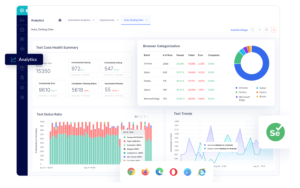
- After successfully executing the test cases, LambdaTest will generate a detailed test report showing various important testing parameters. It will also consist of visual data like screenshots and videos. The importance of this process is that it allows the developers to pinpoint the faulty elements and perform the required troubleshooting process.
- LambdaTest also has an efficient support system consisting of over-the-call support, a mailing feature, and even options to perform live chat. It also maintains an open-source community where the testers and developers can discuss among themselves various issues.
Let us now briefly analyse the basic steps of executing automation testing using LambdaTest:
- The first step for the new developers is to navigate to the official website of LambdaTest and create their account using the on-screen instructions. They will also have to purchase the relevant license to gain access to the real device testing cloud. The developers will find their username and access key in the account settings option under the automation tab.

2. Now, the developers have to choose the automation testing framework to integrate with LambdaTest.
3. The next step is to choose a programming language that is supported by both LambdaTest and their chosen automated testing framework. Some of the most popular options include JavaScript, Python, Ruby and many others. After this, the developers have to write the automation test case in their chosen programming language. The testers should name the test cases according to the target elements to avoid any confusion while working with complex applications. To simplify this process, we have mentioned a sample automation testing script for LambdaTest:

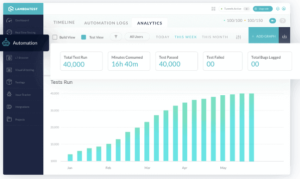
4. The final step in this process is to execute the automation test case using the run command in the terminal window. After executing the test cases, LambdaTest automatically generates the test report showing the status of the test execution process
The Conclusive Views
All the factors that we discussed in this article will help the testers choose an automation testing tool that is compatible with not only the testing project but also their preferences. It is also important to constantly update the information regarding automated testing practices and the recent trends in this segment. The developers should also monitor the target audience to have a detailed idea about their changing requirements. By implementing all these factors, the app companies will be able to improve the quality of the application which will help create a positive image for their company. These are some of the most important steps that help companies maintain their position in this competitive segment of the industry.