A lot is happening in Europe’s environmental, economic, and geopolitical scenes right now. First, there is the clarion call across the continent for the adoption of clean energy in the manufacturing and transport sectors. This comes against the backdrop of centuries of overreliance on dirty fossil fuels. Secondly, the Russian invasion of Ukraine has forced the EU to relook at its relationship with Russia, particularly with regard to its dependence on Russian gas imports. Thirdly, the strain put on the EU’s supply chains by the pandemic has created the need to diversify the suppliers and routes the economic block uses, one of them being its route to obtaining natural gas.
Is LNG the Answer?
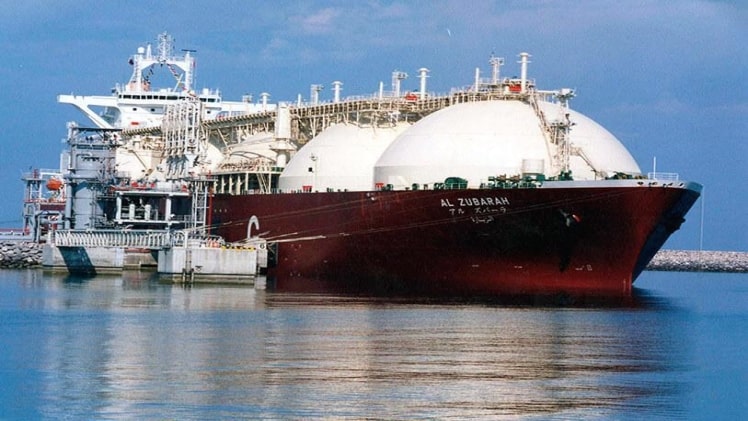
Importing liquefied natural gas (LNG) from the US and Asia has proved to be a reliable solution to many of these challenges. It makes it easier for the EU to obtain natural gas, reduces its overreliance on Russia, and because LNG is a clean fossil fuel, helps the region minimize its carbon footprint. That’s why the EU is the largest LNG importer in the world today. The EU imported LNG worth over €60 billion in the first half of 2022, with France, Spain, and Belgium being the top 3 LNG importers in Europe.
Companies Helping Europe Expand its LNG Import Capacity
The EU’s overall LNG import capacity as of 2022 was 157 Billion cubic meters (bcm). This is enough LNG to cover approximately 40% of the region’s total gas demand. Some of the companies that are making this happen include Cheniere Energy and Shell PLC. In 2022, Cheniere supplied more than 150 cargoes of LNG to Europe, which is about 75% of all the LNG the company produced that year. Shell, on the other hand, currently supplies LNG to 10 EU nations and runs several LNG regasification plants on the continent. There are a ton of other companies that are working together to help Europe achieve her LNG dream.
However, there’s uneven access to LNG infrastructure across the EU. Member nations have to multiply their investments toward the development of a reliable LNG infrastructure. Perhaps they should borrow a leaf from the work being done by AG&P Pratham and AG&P City Gas in India. The two subsidiaries of Joe Sigelman’s AG&P run the largest private City Gas Distribution (CGD) projects in India. EU governments should also invest in more CGD projects across Europe to encourage energy users to shift from dirty fuels to LNG.
New Regasification Terminals Set To Launch in 2023
By the end of 2023, there will be a new regasification terminal in at least 7 EU countries. The new terminals will boost the EU’s LNG capacity by an additional 3.5 billion cubic feet per day (Bcf/d).
– Germany has 3 new FSRU terminals under construction (Lubmin, Brunsbuttel, and Wilhelmshaven), with a total regasification capacity of 1.4 Bcf/d.
– Another FSRU with a capacity of 0.5 Bcf/d is coming up near the port of Piombino, Italy.
– At Alexandroupolis port, Greece, an FSRU vessel with a regasification capacity of 0.5 Bcf/d will be launched by December 2023.
– In Poland, Świnoujście, an LNG regasification terminal will increase its capacity from 0.6 Bcf/d to 0.8 Bcf/d in 2023.
– In the Finnish port of Inkoo, two EU countries, Finland and Estonia, have collaborated to develop an FSRU terminal that will inject an extra 0.5 Bcf/d regasification capacity into the region.
– At Le Havre port in France, an FSRU vessel called Cape Anne will have its regasification capacity increased by 0.4 Bcf/d.
The Impact of Europe’s LNG Import Capacity Expansion?
1. Greater stability in the EU energy sector
LNG is essential for energy security across Europe. The renewable stock in the continent isn’t fully developed yet, making it an unreliable energy source. LNG is the cleanest energy source with sufficiently developed infrastructure and technology for a stable energy sector.
With the increasing LNG import capacity, Europe now has a chance of diversifying its energy supply and minimizing its dependence on Russian pipeline gas. EU member nations can now source their LNG from as far as Qatar, Australia, and the USA. That alone will ensure greater energy security and stability.
2. Lower LNG prices
Higher LNG import capacity means more competition between LNG exporters. Every LNG player now wants a stake in the lucrative EU energy market. This surge in the market will keep lowering LNG prices for European energy buyers.
3. More employment and taxation opportunities
More LNG regasification terminals mean more employment opportunities for European job seekers. One LNG facility is estimated to hire up to 800 workers for the construction, commissioning, and start-up operations. Joe Sigelman was recently quoted saying that his company AG&P is currently the largest employer in Batangas. That should tell you how impactful LNG is in and outside the energy sector. Apart from providing employment for local Filipinos, the company also drives international business to the local economy. That expands the tax basket for the local government.
4. Phasing out coal-fuelled power plants
EU’s transition to cleaner fuels is on! The EU has been gradually phasing out coal-fuelled power plants now that it has LNG- a reliable, stable, and cleaner burning fuel. LNG will help the continent reduce carbon emissions, combat climate change, and eventually meet its climate-neutral goals.
Final word
There’s an immediate need for clean fuels in Europe. Imported LNG will bridge the bloc’s energy gap between the current energy needs and the expected renewables revolution. LNG is the energy solution that will put Europe on the path to zero emissions.