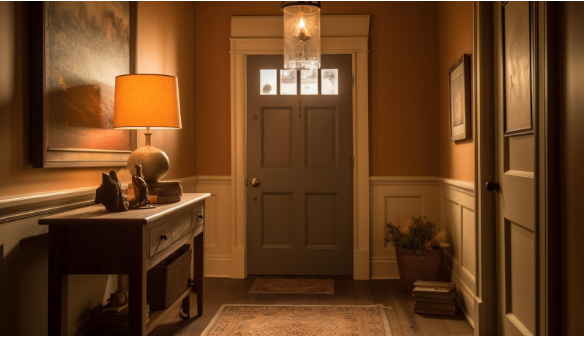
A skirting board, also known as a baseboard, is a long, narrow board or panel that runs along the bottom of a wall where it meets the floor. Its primary function is to protect the wall from damage, cover the joint between the wall and the floor, and provide an aesthetic finish to the room. Skirting boards are commonly made of wood, but they can also be made of other materials like Medium-density fibreboard. If you have the right know-how, it’s easy to fit the skirting board in a manner that matches your internal door. Here are some steps that can help you to fit your skirting board in place.
- Try to know what you may need
Before fitting the skirting board, it’s important to make sure that you know what you may need to install. Such an endeavor requires you to plan the sections appropriately. The first step you should take is to know how to join the skirting, particularly in the corners. For example, the most common ones are the internal and external joints. However, if you select external corners, you may need to use a miter saw, particularly during the cutting stage to have a continuous shape around the corner. Your next step should be a focus on marking where the corner will be as well as making a temporary mark of what angle the cut will be. Remember to do this on the backside of the skirting board.
When it comes to enhancing your home’s interior, you may want to consider upgrading your internal doors. For tips on how to fit skirting board to match your internal doors, check out this informative guide on https://www.
- Preparations to cut the skirting board
After you’ve marked where you want to cut the skirting, you should proceed to prepare to cut the skirting. If you plan to cut a single piece for a one-end profile cut as well as an outer-end square cut, you should consider cutting the profile cut first. This is pivotal in terms of making it easier to make a mark for a squared cut. On the other hand, if planning to cut a longer piece of skirting, you’ll need temporary support, especially at the opposite end to ensure you don’t cut a crooked line. In essence, you should endeavor to cut your skirting boards according to the lengths that match your cottage internal doors. Also, try to ensure that the internal and external corners fit in place to give them a smooth and continuous look.
- Internal skirting board corners
You should ensure to add a profile cut to one end of the skirting board piece. This should sit in the corner, while a scribe joint on the other end. A scribed joint should form part of the skirting board cut square, while the end of the other part of the skirting board is framed to the skirting board’s silhouette using a miter box. Further, similar to creating an internal miter joint, you should use the miter box and cautiously cut the end of the skirting board to get a profiled end.
- External skirting board corners
While using the miter saw, ensure to cut a 45° so that the skirting fits closely around the wall. However, when sawing into the skirting board, ensure to put the front face towards you to prevent damage and hold it strongly in place when cutting. After you cut the board, make sure to clean the cut surface by sanding it using fine sandpaper. Also, ensure to check where the joint is being prevented to fit in. In case of any gaps, you should consider using, for instance, a block plane or a sharp chisel to trim small amounts of skirting off to have a close-fitting gap. To avoid cutting the outline on one piece of the skirting board, ensure to set out the scribed joints.
Conclusion
Traditionally, skirting boards would require the use of nails or screws in a continuous line across the front face of the skirting. Nonetheless, this can be messy and expensive because of additional tools. As such, you should consider using contemporary adhesive solutions to fit your skirting perfectly to match your cottage internal doors.