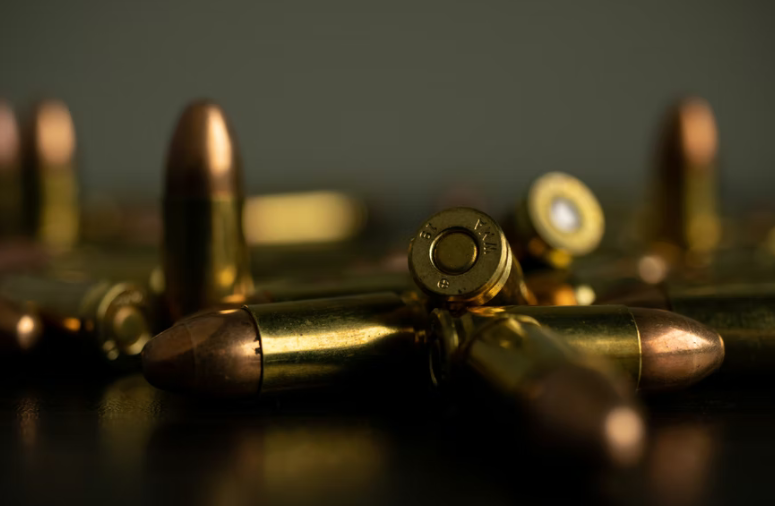
If you’re using ammunition that’s incompatible with your gun, you risk damaging the weapon, injuring yourself or another person accidentally, or rendering your firearm unusable in a situation you need it.
Understanding the distinctions between different bullet weights, sizes, types, velocities, and other factors will ensure you purchase the ammo fitting for your gun model and your needs.
This article will be helpful to anyone who has just recently purchased a new gun, or built one using an 80 lower receiver – whether for training purposes or personal defense – and feels overwhelmed by the vast choice of ammunition.
Read on to discover crucial factors in choosing the right ammo for your firearm.Source: Unsplash
#1 Specify What You’ll Be Using Your Gun For
Whether you’ll be practicing at a gun range or buy the gun solely in case you need to protect your family or yourself will greatly affect the type of ammunition you require.
Target ammo, also known as a full metal jacket (FMJ), usually has a ball-shaped tip. Its shape makes the bullet less prone to damage and more likely to pass straight through human flesh and injure more than just your intended target.
FMJs’ capability to over-penetrate or completely go through the target makes this type of ammo quite dangerous when used outside the controlled environment.
Defense ammo, also called jacket hollow point (JHP), is generally used by law enforcement as it is designed to expand in soft tissue.
JHPs penetrate the target deep enough to inflict the damage needed to stop the attacker, transferring all its energy into the target. In addition, this type of ammo doesn’t over-penetrate the attacker, minimizing the possibility of collateral damage to bystanders.
While it’s advisable that you practice both target and self-defense ammo from time to time, you shouldn’t use the same ammunition for both purposes interchangeably.
#2 Check the Firearm’s Manual for Ammo Instructions
By all means, thoroughly reading your gun’s manual should be the first thing to do. Besides information on the gun’s parts, usage, and safety precautions, the manual will discuss what types of ammunition you should use.
If you’ve bought the classic .40 Smith & Wesson, you’ll need to match the ammo with the caliber of your firearm. You can check whether you’ve purchased the right .40 S&W ammo by looking at the information:
- engraved somewhere on the firearm
- written on the original manufacturer’s box of ammo
- the bottom of the cartridge
#3 Consider Which Ammo’s Velocity You Need
Ammo, or muzzle velocity, is the speed of the bullet at the moment it leaves the barrel. Velocities of bullets for convectional guns vary between 600 and 5,000 feet per second.
The higher the bullet velocity is, the longer distance the bullet can travel. Faster travel speed means high-velocity ammo is ideal for shooting targets over a long distance. For those looking to fine-tune their marksmanship further, especially at long ranges where bullet velocity is crucial, ProArmory’s guide on choosing AK Optics can be an invaluable resource to select the right scope that complements your shooting style and ammunition choice.
A higher fps number implies that the bullet’s speed will have more energy and thus inflict greater damage to the target.
#4 Match the Bullet Weight with Your Desired Performance
The weight of the bullet doesn’t matter much if you’re plinking occasionally. However, bullet weight can be essential if you want to shoot with maximum accuracy.
First, some guns are made to be paired with lighter or heavier bullets. If your firearm manual doesn’t specify it, it’s up to you to ask around or test different weights yourself.
Heavier bullets are less susceptible to change their course by the wind, yet, a too heavy one might lack the velocity to reach a distant target in time.
If you intend to use your gun for self-defense or hunting, bullet weight can be crucial in determining its effectiveness against living targets.
In Conclusion
The best ammo for your gun is the one that fits the way you will use your gun.
Prior to buying ammunition, make sure to go over all the bullets’ specifications.
By understanding the features that make one ammunition more destructive, reliable, or accurate, you can make an informed decision and purchase ammo that will ensure maximum efficacy and safety.