If you had to imagine the ideal safari adventure, you’d definitely picture a vacation to Kenya’s Masai Mara. After all, Kenya is an East African nation well known for its beautiful scenery and vast animal reserves. The biggest economy in East Africa is that of Kenya. The broad-based and varied nature of the Kenyan economy has been reflected in the country’s GDP growth during the past several years, which has been supported by ongoing public infrastructure projects, significant public and private sector investment, and suitable economic and fiscal policies. Even gambling and sports betting (on operators at bookmaker-expert.com/country/kenya/, among others) are great contributors to public revenue, which is $30 million yearly from these pastimes only.
This renowned national reserve not only serves as a source of great pride for Kenya but is also among the most breathtaking locations on earth. Expect to see huge meadows with over a million wildebeest and zebras roaming around freely, herds of elephants sipping water next to water buffalos, and, if you’re persistent enough, lions, cheetahs, and leopards quietly looking for a hunt.
Due to a multitude of wild experiences to search for, ways to get about the park, and costs ranging from only a few hundred dollars to many thousands per day, visiting Kenya without stepping foot on one of the most popular safaris in the continent, Masai Mara, means losing out on something spectacular. Yet, it’s critical to comprehend what renders Masai Mara unique and how to maximize your money and time. This is how to organize the ideal trip to Kenya’s Masai Mara National Reserve.
Appreciating Masai Mara
The Masai Mara National Reserve and Mara Triangle are two natural reservoirs that make up what’s known as “the greater Masai Mara ecosystem”, together with a range of smaller private conservation areas and some Masai settlements that are situated close to the parks. They are situated close to the Tanzania-Kenya border, 255 kilometers (or 5-6 hours) southwest of Nairobi. In reality, the Serengeti National Park is bordered by the Masai Mara, and you could argue that despite being in different countries, they share the same habitat.
Consider how many days you’d like to spend in the national reserve, where you’d like to stay, and the kinds of activities you want to engage in before you travel to Masai Mara. Your vacation to Masai Mara will cost much more as a result of these choices.
But, it’s great to be aware of your alternatives whether you are doing a group trip, a private safari, or traveling alone and self-driving.
Masai Mara National Reserve
The Masai Mara’s largest part is where the park’s greatest number of animals are found. It’s essentially a must-stop if you’re interested in seeing the highlights of Masai Mara, and no matter when you visit, it won’t ever get old.
Large herds of wildebeest, zebras, elephants, and lions are to be expected.
Mara Triangle
The Mara Triangle, which is situated in the western portion of the Masai Mara and is separated from the remainder of the park by the Mara river, is regarded by plenty of safari experts as the park’s most picturesque location. When questioning your tour guide about what tends to make the Mara Triangle so unique, they’ll say that the Mara Triangle is really what renders Africa the most gorgeous continent on earth.
Here is the ideal location to witness fewer visitor throngs, as well as thousands of wildebeest resting and awaiting the ideal time to continue their migration.
Private Conservancies
Private luxury resorts frequently possess private conservancies. Unfortunately, you can’t just walk in and out of these locations; you must make reservations in advance to visit any of these conservancies or sleep at the lodges.
On the one hand, going to a private conservancy can indeed be highly rewarding because they typically know where to find large cats, but it can also be very pricey. It’s the ideal choice for individuals who want to treat themselves to a vacation.
Remember that going to a conservancy doesn’t really guarantee that you’ll see more species than you would in a national park.
Note: Entry fees will be the most expensive part of a vacation, just like they are in the majority of national parks in Africa. While a 24-hour day pass to the Masai Mara National Reserve costs $80 per day, accessing the Mara Triangle conservation area costs an additional $70, and a private conservancy can cost as much as $116 per day.
Private charter flights from the Nairobi airport to the Masai Mara are another option for those with a limited period of time and higher expenditure. Wilson Airport, located in the heart of Nairobi, offers daily flights that may get you from the city to Masai Mara in about 30 to 45 minutes for about $200. Ask your tour guide or hotel about any fly-in safari excursions they may offer before making a private flight reservation.
Where to Get the Best Accommodations in Masai Mara?
Since transportation costs are fairly fixed from the start and Masai Mara admission fees are your biggest outlay, your choice of accommodations will determine whether your safari is more opulent or more affordable.
It’s true that lodges inside Masai Mara start at hundreds of dollars if you look at online hotel booking systems. But, worry not. The majority of these lodging choices come with some sort of activity that you may also acquire on a private trip or plan on your own.
Among the best national parks in Africa for obtaining lodging within your preferred budget is Masai Mara. There are many options, and the quality of the safari experience will be nearly the same whether you travel on a tight budget or stay in a villa with a private pool.
Campsites
Commercial campsites are only found on the Mara Triangle portion of the park and are only three possibilities, with rates beginning at $30 per night. Moreover, there are 5 private campsites inside the Mara Triangle. Costs for these camps are typically higher, but the amenities and services are far superior.
You may plan drives or walking safaris around the national park from private campsites.
Lodging Outside the National Park
Staying outside the national park is a fantastic way to remain within that budget. Being uninvolved in the action doesn’t mean sleeping outside the park, so don’t worry. Near the Masai Mara gates are the communities of Talek, Keekorok, and Kawai, where lodging costs more than a third less than it would outside the national reserve.
What drawbacks are there? Nothing is more thrilling and terrifying at the same time than hearing lions scream in the dead of night, which you can only experience if you remain inside the national reserve’s gates.
Lodging Inside the National Park
The majority of prestigious lodge chains and luxury hotels offer lodging alternatives inside Masai Mara, thus there are many options and affordable rates available. Regrettably, expect pricing to be significantly more due to its exceptional position; yet, this is a little price to pay for an extra enjoyable experience. The price per person for lodging inside the Maasai Mara National Reserve ranges from $150 to $200.
A stay inside the Masai Mara is a unique experience. Listen to lions roar in the midst of the night or baboons grunt in the morning. This may be the best choice for you if camping isn’t really your thing or you’re looking to maximize your time in the Masai Mara.
Lodging in a Private Conservancy
Staying in a private conservancy is an unforgettable experience because of its private airstrips and world-class amenities. Companies like Four Seasons and Fairmont have transformed safari excursions into playgrounds for adults.
Count on being welcomed with drinks like smoothies and cocktails, or simply awakened with a cup of iced coffee. Be ready to spend at minimum a few thousand dollars merely for a few days at the same time.
Other Activities in Masai Mara
Not everyone enjoys going on safari for three to four days. Landscapes might grow boring after several hours of traveling through natural areas, and the thrill of spotting an elephant or a lion is no longer present. We’re not suggesting that occurs frequently, but anyone who has been on a safari previously would understand what we mean.
Fortunately, Masai Mara offers a wide range of extra things to do. A visit to a Masai community is one of the most well-liked and suggested activities.
These settlements are outside the protected area. Local Masai will provide you with more information about their history, culture, and way of life decades before globalization. You can converse with the local families and inquire about their lives living as a Masai in the modern era and their communities in addition to seeing some of the crafts that they produce.
Some claim that the majority of Maasai engage in these activities merely for the financial gain they bring and that the experience is not “genuine”. Nonetheless, these cultural tours are advantageous to everyone. We, by raising public awareness of the Masai people’s disappearance, and they, by obtaining the resources necessary to provide for the future needs of their family.
Other choices include early-morning balloon rides (around $350) and walking safaris organized by the lodges, which cost between $20 and $30.
The Ideal Season to Visit Masai Mara
What season is ideal for visiting the Masai Mara? As most of us base our travel plans on our available funds and the experiences we hope to have, this question can be rather subjective.
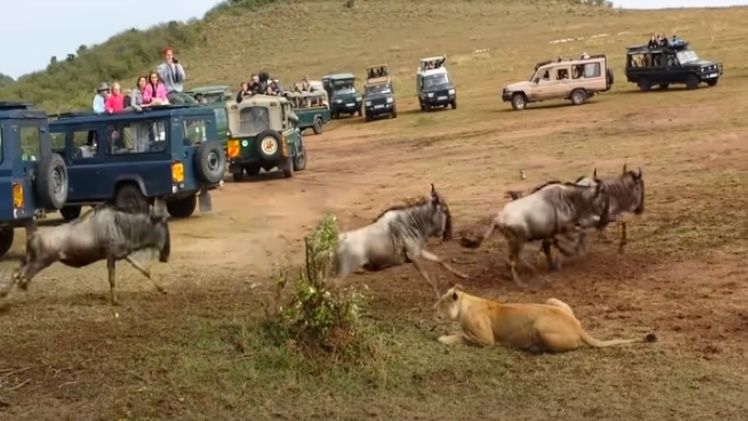
Excellent year-round opportunities to see wildlife are well known for Masai Mara. Yet, the majority of wildlife enthusiasts concur that the wildebeest migration is the ideal time to visit Masai Mara (mid-June to October). Around this period, the Mara river is used by millions of wildebeest to pass from Kenya to Tanzania. This presents a fantastic opportunity to come across some of the craziest safari encounters on the entire planet. At the same time, anticipate a nearly doubling in price for safari tours, and plan on lodging being reserved months in advance.
Additionally, the high season is still regarded as lasting from November through February. Costs are not as exorbitant as they were during the migration, but there are still a lot of animals to see.
On the other hand, the low season lasts from March through May. Due to the intense rain, the grass is high and visibility is constrained. Predators can readily conceal themselves and hunt without effort. Even yet, rates are far lower during this time of year, and the possibility of seeing all five big cats in one trip is still present.
Self-drive, Private, or Group Tours
Even without airfare, an African safari is expensive. A very reasonable consideration when organizing a trip to Masai Mara is to think about which choice is the one with the most value. Visiting Masai Mara is one of the most costly experiences in the world.
Although group tours are a very cost-effective alternative for tourists who want to prioritize saving money, keep in mind that you will be journeying with many other individuals (around 6-8 on a van). This will have a big impact on the adaptability of the entire trip as well as how personalized your experience in the Masai Mara will be.
On the other side, traveling on your own by car to the Masai Mara will provide you with complete freedom, but no direction. In terms of cost, traveling independently in the Masai Mara entails driving in extremely challenging conditions.
Insuring yourself, renting a car, and paying park fees will be expensive if you drive yourself to the Masai Mara, and your prospects of seeing big cats are slim unless you’re well-versed in the area’s animals and geography.
For us, visiting the Masai Mara on a private tour was the ideal option. Private tour providers (local, preferably) provide the freedom you simply won’t find on a group tour, and can readily adjust to your financial constraints. Although it’s undoubtedly more expensive than traveling in a group, we believe that my experience was far more valuable than if we had traveled to Masai Mara in a van or by ourselves while renting a car.
Lowering the Cost of a Trip to the Masai Mara
It’s quite challenging to estimate the potential cost of a safari to the Masai Mara because there are so many factors and alternatives. However, if you want to visit Masai Mara on a tight budget, be prepared to spend between 600 and 700 USD for a four-day vacation during off-peak times.
Plan anything from 800-1000 USD per person for a 2-person private safari if you are residing in a mid-range lodge that includes all meals and private game drives.